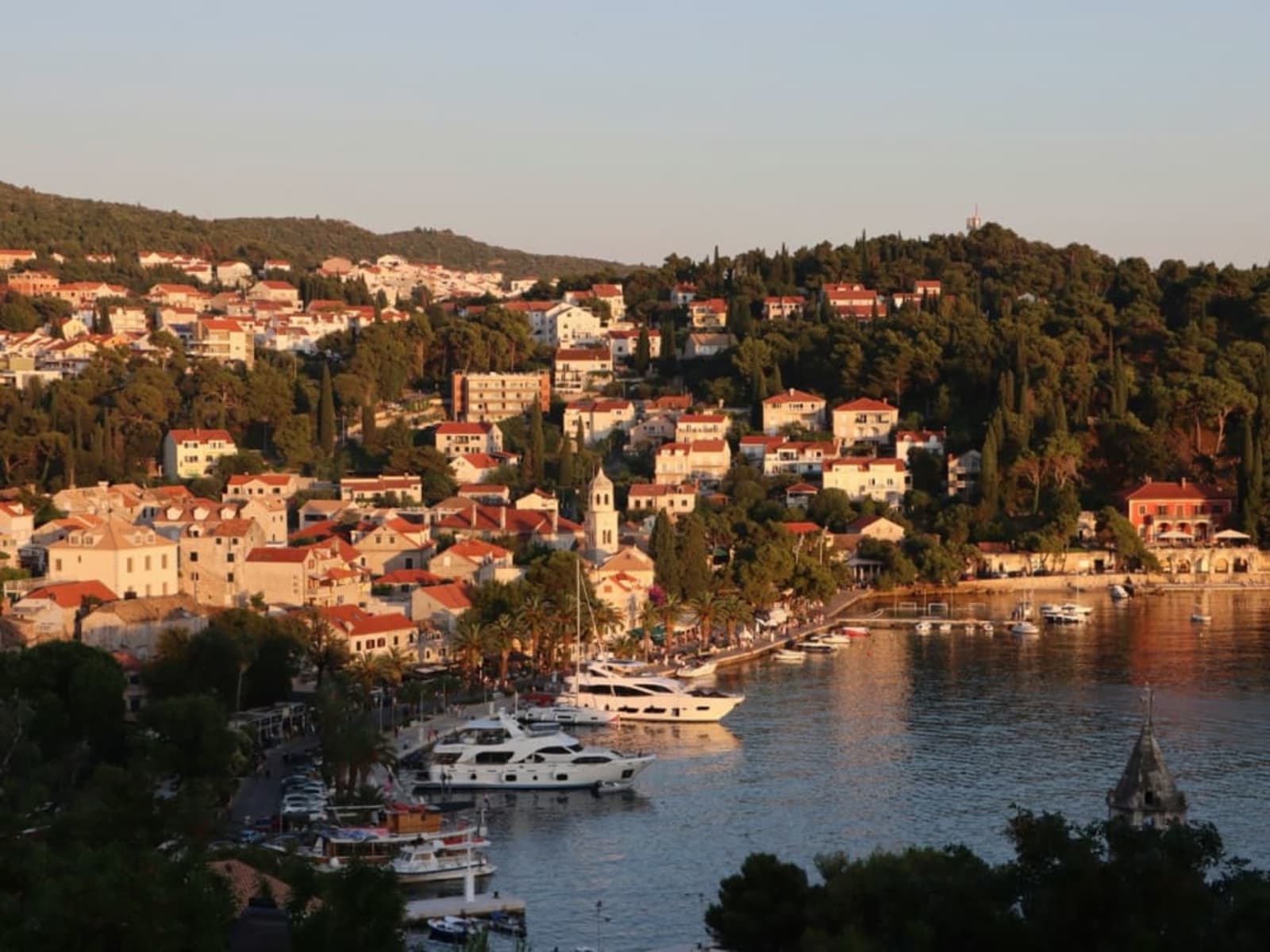
Coastal Charm and History: An Introduction to Cavtat
Cavtat was my first impression of the Balkan countries, and it was a great introduction. Trading our usual flat city routines for steep hills and clear, Mediterranean blue water was a welcome change of scenery.
We will eventually circle back to the famous walls of Dubrovnik later in this series, but starting in Cavtat offers something special. It is a small, walkable coastal town that, while popular with domestic and foreign tourists alike, manages to retain a quiet, unhurried rhythm. More importantly, it is a practical microcosm of the region.
The Afternoon Stroll
Our trip began with a walk from our newer accommodation down toward the Marina and into the Old Town. The transition is immediate: the busy marina quickly gives way to steep residential alleys. Here, you will pass well-fed cats lounging in the sun as you wander past the town's historic architecture.
A Living History Book
As you explore, you realize that Cavtat is more than just a picturesque resort. It is a living history book that sets the stage for understanding the Dalmatian coast:
- The Crossroads of Empires: Croatia’s coast has long been a strategic prize. Cavtat began as a Greek colony called Epidaurus between the 6th and 4th centuries BC, later becoming a Roman settlement. When it was sacked by Slavic and Avar invaders in the 7th century, the fleeing refugees settled on a nearby rocky islet—which eventually grew into the walled city of Dubrovnik.
- The Republic of Ragusa: For centuries, Cavtat was the second-most important town in the Republic of Ragusa (the wealthy maritime republic based in Dubrovnik that rivaled Venice). The stone captains' houses you see along the harbor are direct reflections of this era of Croatian seafaring and trade.
- A Deep Artistic Heritage: Cavtat is the birthplace of Vlaho Bukovac, one of Croatia’s celebrated modern painters, proving that the country's cultural contributions extend beyond its natural landscape.
Exploring the Heights: A Monument to Maritime Life
Our walk eventually led us up to the Cemetery of St. Roko (Sveti Rok). Located at the highest point of the Rat Peninsula, the cemetery contains the graves of those historic sea captains and merchant families—a visual reminder of how dangerous, yet profitable, the seafaring life was.
The centerpiece here is the Račić Family Mausoleum. The story behind it is one of Cavtat's most tragic: Ivo Račić was a successful local sea captain whose wealth could not save his family from the Spanish Flu around the end of WWI. His widow, the sole survivor, used their fortune to commission the famous Croatian sculptor Ivan Meštrović to build their final resting place. Constructed entirely without wood or metal in 1922, this white-stone, Art Deco structure offers panoramic views of the Adriatic Sea.
A Deep Dive into Dalmatian Cuisine
As evening set in, we turned our attention to the food. A staple of coastal Croatian taverns is Crni rižot, or Black Risotto. Originating in local fishing communities, this dish gets its ink-black hue and briny flavor from fresh cuttlefish or squid ink. We had a classic version for lunch at Zino for 15 euros.
For dinner at Ankora, which came to 39.5 euros, we found a variation: a black barley risotto paired with pac cheese. (Pag cheese, or Paški sir, is a sharp sheep's milk cheese from the Croatian island of Pag, unique because the sheep graze on wild, salty coastal herbs). We paired this with an eggplant casserole, orange juice, and a glass of Cuvée DP (Dubrovački Podrumi - Dubrovnik Cellars, so yes, very much next-door local.)
No coastal evening is complete without a sweet treat; we grabbed a 2-euro scoop of ice cream from Rozata to enjoy while strolling by the water as the day wound down.
The Next Morning: Fueling Up for the Road
The next morning, we woke up and walked over to Peco Bakery. It is one of the few spots in town that opens early, making it a reliable stop when you need a morning caffeine fix before hitting the road.
It is easy to see why it is a local favorite: they are known for pulling strong espresso, and their pastry cases are packed with fresh baked goods. We grabbed two coffees, an apple strudel, and a cheese and spinach pastry for 14 euros. It was a quick, necessary fuel-up before we finally packed the car and drove two hours down into Kotor, Montenegro.
📝 Traveler's Notebook
Shop Smart
There are small shops sprinkled throughout the town. I picked up a straw hat to combat the sun—just remember that you can, and should, politely bargain.
Stay Hydrated
Be sure to stock up on bottled water from the local supermarket, especially because exploring this town requires walking up its steep hills.