A Manifesto for a Second Chance in Hội An
The challenge of writing about Hội An is that it is a city of "beautiful tension." It is a place of high-speed tailoring and 400-year-old patience; of delicate yellow walls and the brutal, muddy reality of a river that insists on visiting every year.
A first visit often results in a state of comfortable distraction—seeing the reflection of the lanterns, but never the hands that lit them. To return is to acknowledge that the "postcard" version is only the surface. This is a manifesto for going deeper: a commitment to finding the pulse of the place—the grit under the gold.
The Ghost of a Global Crossroads
To understand why Hội An feels so distinct, one must look for the "Merchant’s Ghost." In the 16th century, this wasn't just a town; it was a sophisticated settlement system.
The Japanese and Chinese traders who arrived here didn't just trade; they stayed. The Japanese Covered Bridge (Chùa Cầu) remains a literal bridge between two worlds—connecting the Japanese quarter with the Chinese one across the canal. But history is rarely static. By the 19th century, the Thu Bồn River began to silt up, making it impossible for large ships to dock. The global crossroads moved to Đà Nẵng, and Hội An was essentially frozen in time.
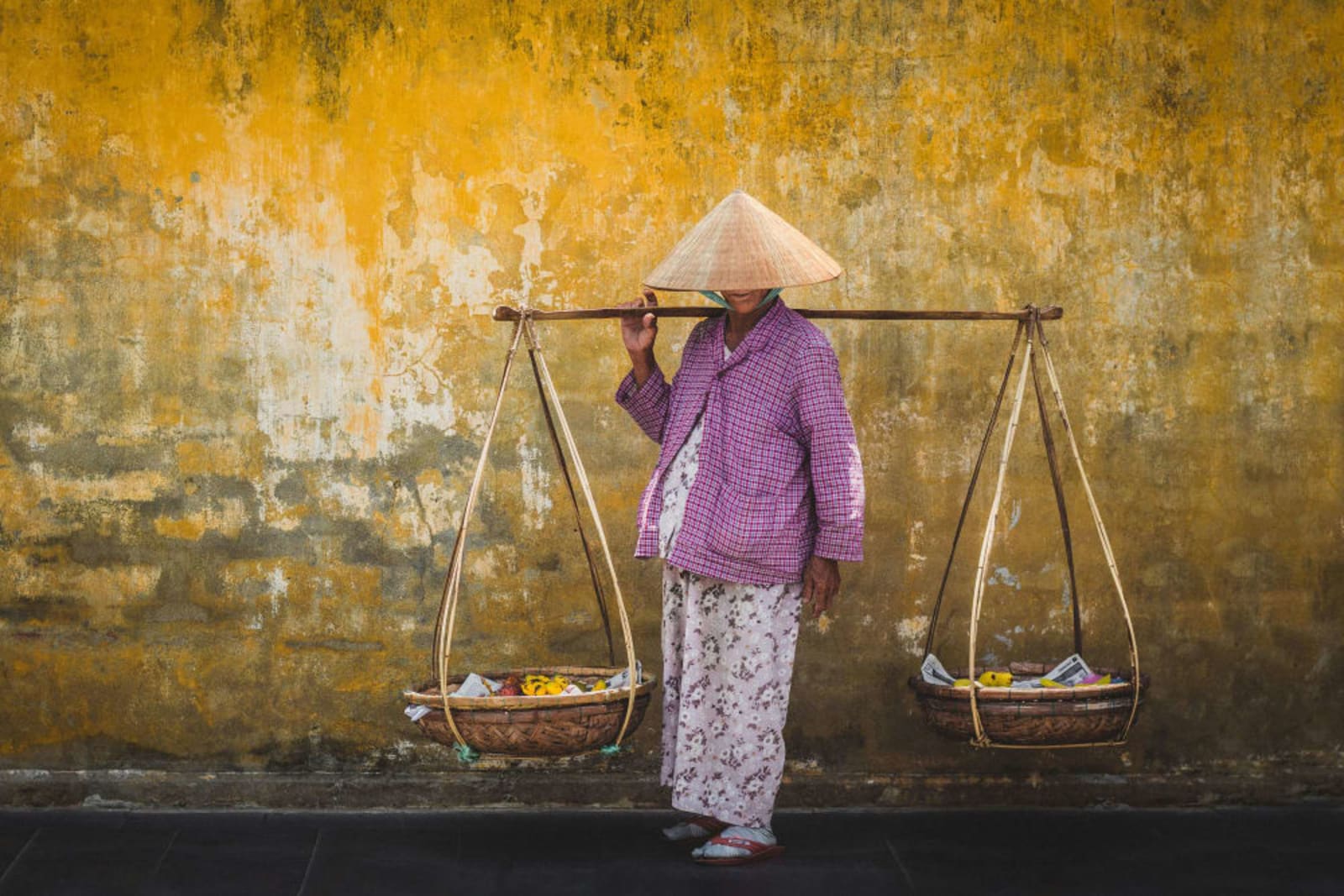
The foreign tradesmen are no longer at the core of the local community, but they left behind a DNA of synthesis. You see it in the "Hội An Yellow" walls—a color associated with royalty and prosperity, but also a practical architectural choice to reflect the intense sun and keep the ancient wooden interiors cool.
Trading the Glow for the Dawn
The second chance begins with a trade: giving up the late-night English music bars and the night markets for the early morning market.
There is a specific clarity at 5:30 AM, when the air is still cool and the river is a sheet of glass. This is the hour to witness the exchange of goods that has fueled this town for centuries—not for tourists, but for the families who live here. The goal is to watch the city wake up before it puts on its "mask" for the day.
A Patron of Patience: The Craftsmen
Modern travel demands a suit in 24 hours, but convenience is often the enemy of craftsmanship. In a city known for its world-class tailors and woodcarvers, I choose to be a patron of patience.
This means seeking out the artisans who are stubbornly proud of their work—the ones who insist on three fittings because "it isn't right yet," or the carvers in Kim Bồng whose hands are stained with the wood of a thousand altars. To sit in their workshops and listen to the rhythm of their tools is to understand the years of discipline it takes to make something that lasts longer than a holiday.
The True Flavor of the Earth
The manifesto moves past the "tourist menu" to find the food that tastes of the land.
- The Alchemy of Cao Lầu: Find the vendors who still talk about the Bá Lễ Well. Legend says the noodles only get their distinct, chewy texture when soaked in the alkaline water from this specific ancient well.
- The Humility of Cơm Hến: Eat baby clam rice with the people who harvested them from the river that morning.
There is a story of soil and survival in the "walking chickens" used for Cơm Gà and the organic herbs from Trà Quế that haven't changed in generations. Food is more than gastronomy; it is a narrative of the earth.
The Resilience in the Silt
Hội An’s greatest strength isn't just its beauty; it’s its stubbornness. Every year, the river reclaims these streets. If you look closely at the wooden pillars of the ancient tea houses, you’ll see the faint, dark lines where the water peaked.
The "charm" we admire is actually the result of relentless labor. The locals don't just live in a museum; they fight for it. Every flood is followed by a collective scrubbing—a defiant act of vanity and survival that keeps the gold glowing for the next season.
The Vow of the Returning Visitor
Perhaps the solution to a city being "too touristy" is simply for us to be better guests. To be a "returning visitor" is to stop consuming and start connecting.
My next trip won't be about finding a pleasant porch to relax; it will be about finding a seat where I can listen. The gold of Hội An doesn't come from the paint; it comes from the people who refuse to let the history wash away.