Okonomiyaki, But Make It Hiroshima
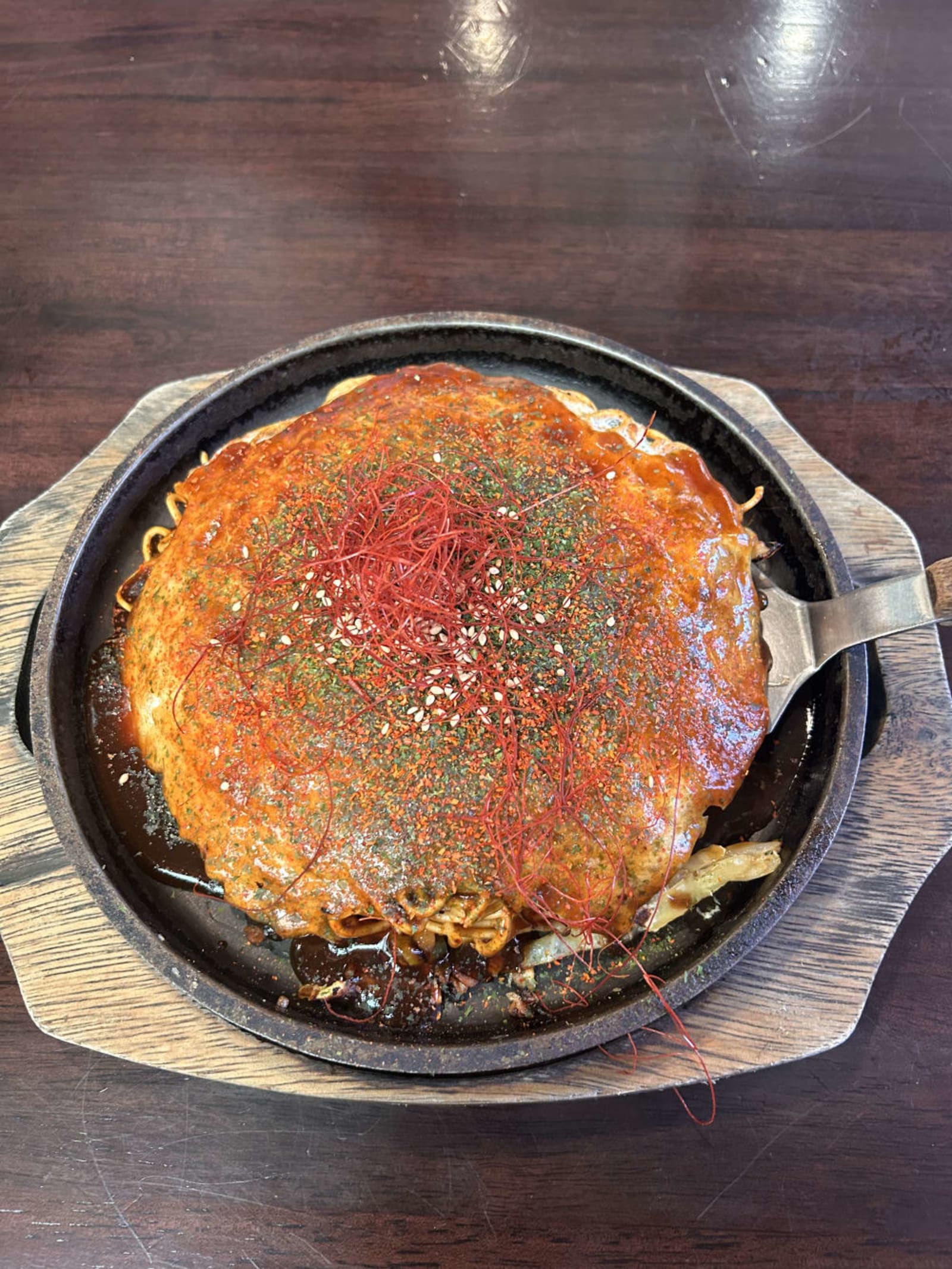
If you want to understand the heart of a city, you have to eat its street food. For Hiroshima, that heart beats on a hot iron griddle, sizzling with the savory, sweet, and utterly addictive aromas of its signature dish: Hiroshima-style okonomiyaki.
I still think about my visit to Okonomiyaki Teppan-yaki Momiji-tei. It’s a tiny, intimate space, which meant braving a line outside before I could even get a glimpse of the grill. But that wait was entirely worth it. Once inside, the sheer spirit of the staff was magnetic. Watching them orchestrate dozens of spatulas, working shoulder-to-shoulder in a cramped space with relentless energy, precision, and a genuine smile, was like watching a culinary ballet.
It’s more than just a meal; it’s an experience. But to truly appreciate what you're eating, you need to understand how this incredible dish came to be, and how it stands apart from its famous rival.
The Great Divide: Hiroshima vs. Osaka
If you've had okonomiyaki before, there's a good chance it was the Osaka (or Kansai) style. While both share the name—which roughly translates to "whatever you like, grilled"—their execution is entirely different.
| Feature | Osaka-Style Okonomiyaki | Hiroshima-Style Okonomiyaki |
|---|---|---|
| The Method | Mixed. All ingredients (batter, cabbage, meat, seafood) are stirred together in a bowl before hitting the grill, cooking into a thick, dense pancake. | Layered. Built sequentially on the grill. The ingredients are never mixed before cooking. |
| The Base | A thick batter made with flour, grated yam (nagaimo), eggs, and dashi. | A paper-thin crepe-like batter that acts as a foundation. |
| Noodles | Usually none (unless you order modanyaki). | Essential. A hearty layer of yakisoba or udon noodles is a staple of the dish. |
| Cabbage Volume | Moderate, mixed into the batter. | Massive. A towering mountain of shredded cabbage that steams down to a sweet, tender layer. |
The Takeaway: Osaka-style is hearty, dense, and cake-like. Hiroshima-style is a masterclass in textures—the crispy noodles, the sweet steamed cabbage, the crispy pork, and the thin, savory crepe, all working in harmony.
Anatomy of a Hiroshima Okonomiyaki
Watching the chefs at Momiji-tei build the dish is mesmerizing. It follows a strict, time-honored sequence:
- The Crepe: A thin ladle of batter is spread into a perfect circle on the hot teppan. A sprinkle of bonito flakes (fish powder) goes on top for umami.
- The Mountain: A shockingly large handful of finely shredded cabbage is piled high, followed by bean sprouts, tempura crisps (tenkasu), and green onions.
- The Meat: Thin slices of pork belly are draped over the top.
- The Flip: With two metal spatulas (hera), the chef swiftly flips the entire towering structure over. The pork crisps against the grill, while the cabbage slowly steams under the weight of the batter.
- The Noodles: Nearby on the teppan, a portion of yakisoba (or udon) noodles is stir-fried with a splash of savory sauce. The steaming cabbage/pork stack is lifted and placed directly on top of the noodles.
- The Egg: An egg is cracked onto the grill and spread thin. The entire noodle/cabbage/pork stack is moved once again to sit on top of the egg.
- The Finish: The whole masterpiece is flipped right-side up, painted with a generous layer of thick, sweet, and savory okonomiyaki sauce, and dusted with green seaweed powder (aonori) and sesame seeds.
A History Forged in Resilience
Hiroshima-style okonomiyaki is quite literally the taste of survival and recovery.
Before World War II, a simple children’s snack called issenshoku (one-coin food) existed—a thin crepe folded over green onions or whatever cheap ingredients were on hand. But after the atomic bombing in 1945, the city was left in ruins, and food was desperately scarce.
During the post-war reconstruction, the US military provided rations of wheat flour. Resourceful locals took the concept of issenshoku and began bulking it up to feed starving families. Cabbage was cheap and grew easily, so they added heaps of it. Later, as the economy recovered, they added noodles and pork to make it a calorically dense, filling meal for the laborers rebuilding the city.
The dish evolved from a desperate necessity into a beloved community staple. Originally served at small food stalls (yatai) built from scavenged materials, it brought people together around a warm grill. That same communal, hard-working spirit is exactly what I felt radiating from the staff at Momiji-tei.
When you eat Hiroshima-style okonomiyaki, you aren't just eating a delicious pile of noodles, pork, and cabbage. You are eating the culinary symbol of a city that refused to give up, served up by people who still carry that fiery, welcoming spirit today.