Beyond the Ragù: The Red, The Fat, and the Learned Soul of Bologna
The transition from the shimmering canals of Venice to the sun-drenched, terracotta-hued streets of Bologna is a sensory shift that’s hard to describe. I arrived on a sweltering summer afternoon, the kind where the heat bounces off the pavement, expecting one thing: the culinary pilgrimage of a lifetime.
Like many, I knew "Bolognese" long before I knew Bologna. It was my gateway into Italian cuisine—the comforting, meaty sauce that, alongside pizza, defined "Italy" for me as a kid. There is a certain comedy in arriving here and realizing that the very dish the world associates with this city is often met with a disdainful shrug by locals. "Spaghetti Bolognese? That doesn’t exist," they’ll tell you. To order it here feels like a minor sacrilege; in this city, the only partner for that rich, slow-cooked meat sauce is fresh, golden Tagliatelle.
But while I came to eat my heart out, I left having lost my heart to something much larger. Bologna didn't just meet my sky-high expectations; it blew them away with its nicknames and its "secret" history.
The Three Faces of Bologna
To understand this city, you have to understand the three titles it has carried for centuries:
- La Grassa (The Fat): A nod to its status as the culinary capital of Italy. While other regions historically cooked "cucina povera" (peasant food), Bologna’s wealth allowed for an indulgent culture of eggs, butter, and noble meats like Mortadella.
- La Rossa (The Red): Originally referring to the stunning terracotta rooftops and bricks that glow at sunset, though later it came to represent the city’s storied political defiance.
- La Dotta (The Learned): Home to the University of Bologna, founded in 1088—the oldest university in continuous operation in the Western world.
The City That Dared to Rival the Pope
Bologna has always been a bit of a rebel, a wealthy commune that wasn't afraid to flex its muscles against the Vatican. You see this most clearly in Piazza Maggiore at the Basilica di San Petronio. It is one of the largest churches in the world, but the facade is split: beautiful marble on the bottom, raw brick on the top.
Local ambition was so high they wanted it to be larger than St. Peter’s in Rome. Rumor has it the Pope halted construction by ordering a new university building—the Archiginnasio—to be built right next to it, physically blocking the church from expanding. It remains a massive, beautiful monument to "what could have been."
Even the Fountain of Neptune (locally called Il Gigante) carries a spark of rebellion. The sculptor, Giambologna, was told by the Church not to make the statue’s "endowments" too large. He complied, but positioned Neptune’s hand so that from a specific angle near the Sala Borsa library, his thumb creates a very suggestive optical illusion.
A Skyline of Giants and Sheltered Streets
In the Middle Ages, Bologna looked like a stone Manhattan with over 100 towers built by rival families. Today, the Two Towers (Le Due Torri) define the skyline. The Garisenda tower leans so precariously that it was famously mentioned by Dante in The Inferno. It stands as a testament to the city’s ancient, slightly off-kilter charm.
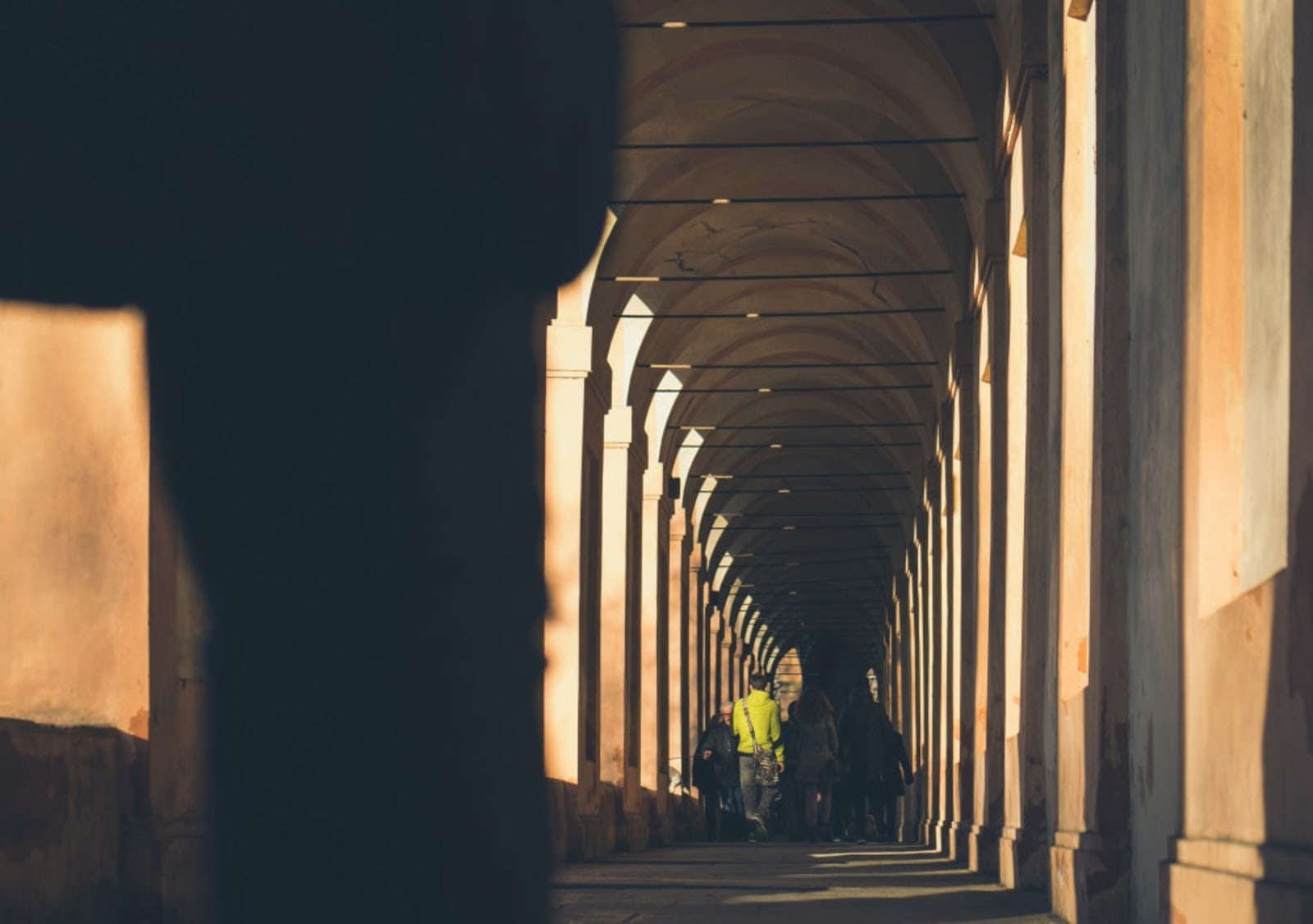
Connecting these landmarks are the Porticos. These 40km of arched walkways weren't just for shade; they were a medieval solution to a housing crisis. As the university grew, residents built "add-ons" that extended over the street to house students. Today, they create a sheltered, open-air cathedral that makes the city walkable even in the peak of a summer heatwave.
Hidden Marvels and Summer Nights
Beyond the main squares, Bologna hides its best secrets:
- Square Santo Stefano: Known as the "Seven Churches," this is a marvelous complex of interconnected chapels hidden behind old, unassuming walls. It’s a labyrinth where the air feels centuries older.
- The Quadrilatero: The ancient market district where the narrow streets still hum with the same energy they had in the Middle Ages.
- Cinema Under the Stars: Perhaps the most magical part of my visit was the Sotto le Stelle del Cinema. Every summer night at 9:00 PM, Piazza Maggiore transforms into a massive open-air cinema. Thousands sit in silence under the stars, watching masterpieces projected onto a giant screen framed by medieval palaces.
Final Thoughts
Bologna is a city of layers. It is the intellectual rigor of Guglielmo Marconi (the father of radio) and the indulgent soul of the "fat" kitchen. It is a city that respects its traditions enough to correct your pasta choice, but it’s also warm, welcoming, and endlessly vibrant.
If you’re traveling through Italy, don't just pass through the station. Step out into the heat, find a portico, and let this city surprise you. You might come for the food, but you’ll stay for the stories.