The Liquid Gold of Modena: A Private Lesson in Patience and Pride
If Bologna is the heart of Italian gastronomy, Modena is its soul—specifically, the dark, syrupy, and complex soul found inside a tiny, 100ml bottle of Traditional Balsamic Vinegar of Modena D.O.P.
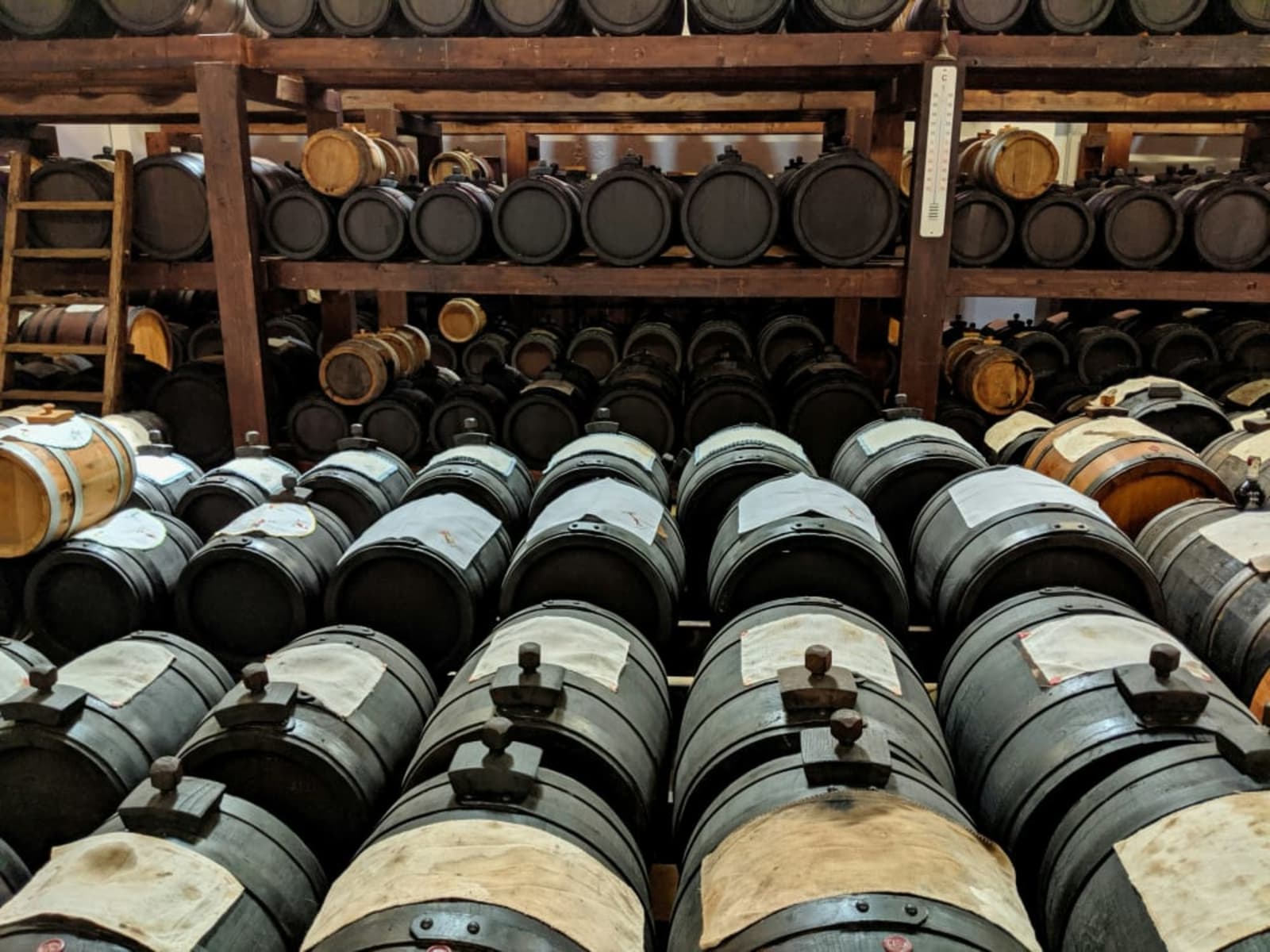
I took the bus from Bologna on a day when the summer heat was thick enough to wear. Most people duck into the shade to escape the sun, but I was headed into the attic of Acetaia di Giorgio. I quickly learned that for the people here, the heat isn't a nuisance; it’s a critical ingredient. The searing summer temperatures drive the evaporation and concentration of the sugars, while the biting winter cold allows the sediment to settle.
Fate was on my side that afternoon. Another group was running late, turning my visit into an impromptu solo tour. With the undivided attention of my host, I was able to ask every question I had—and I had many.
The Law of the Land (And the Table)
We joked during the tour about the Italian stereotype of "relaxed" rules. In Italy, traffic signs might be decorations, but when it comes to food, the law is absolute.
In the U.S. or elsewhere, "Balsamic Vinegar" is a generic term for thin, tart liquid. In Modena, Traditional Balsamic (D.O.P.) is a protected treasure. The process is a masterclass in patience, starting with specific local grapes (usually Trebbiano and Lambrusco) and moving into the batteria—a series of barrels in decreasing sizes.
- The Woods: Every barrel is made of a different wood—oak, chestnut, cherry, juniper, or mulberry—each imparting a specific note to the final symphony.
- The Committee: A literal committee of expert tasters must approve every single barrel. If it doesn't meet the standard, it isn't bottled. Only the best is placed into the official, legally-mandated 100ml bottle before being handed back to the families who have been doing this for decades. Some families make just enough for themselves and their inner circle—a liquid inheritance that can’t be bought.
Unlearning the Balsamic Myths
One of the most fascinating parts of the tour was unlearning "Western" balsamic etiquette. I quickly realized that the way we consume it abroad is often considered a waste of a "royal" condiment.
- The Bread Myth: Dipping bread into a mixture of olive oil and balsamic is almost non-existent here. To a local, it’s like diluting a fine aged scotch with soda.
- The Vanishing Bottle: In Italian restaurants, you won’t find balsamic sitting on every table. If you want a drop for your salad, you must ask for it. The waiter will bring the precious bottle over, and shortly after you’ve used your few drops, the bottle is promptly whisked away.
- The Fridge: Because of its stability and concentration, you never need to store this in the fridge. A dark cupboard is its perfect home.
The "One Backpack" Rule (And Why I Broke It)
I traveled to Italy with just one backpack. I had made a strict promise to myself: no souvenirs. My space was finite, and I planned to return with nothing but memories and a few children's books for my niece.
Then came the tasting.
The tour at Acetaia di Giorgio was free, led by a host whose kindness and pride were infectious. While there is no "entrance fee," there is a well-deserved expectation that you’ll buy a bottle. For a standard 12-year-old bottle, you’re looking at a price range of around €45 to €60, with the 25-year-old "Extra Vecchio" easily doubling that.
As a non-dessert person, I even tried the local balsamic gelato at a shop later on. While I wasn't particularly impressed—dessert just isn't my thing—the vinegar itself won me over. My "no-buy" rule shattered. I ended up hauling that tiny, mighty bottle all the way back to Asia, where it now sits on my sister’s kitchen shelf.
The "Not-So-Sweet" Pairing Guide
If you aren't a dessert person, skip the gelato and try these traditional, savory pairings:
| Pairing | Why it Works |
|---|---|
| Parmigiano Reggiano | The ultimate pairing. A 24-month aged cheese with a single drop of 12-year balsamic. |
| Beef Tagliata | Drizzle it over simple grilled steak and arugula to elevate the richness of the meat. |
| Fresh Strawberries | The acidity of the vinegar makes the berries taste more intense without being "syrupy." |
| Risotto | Stir a teaspoon into a creamy parmesan risotto right before serving for a complex finish. |
Final Thoughts
Standing in that attic, surrounded by the scent of aging wood and fermenting grapes, I realized that the price of a bottle isn't about the liquid; it’s about the time. It is the 12, 25, or 50 years of waiting.
My trip to Modena gave me a significant new respect for the Italian dedication to their crafts. In a world of fast food and instant gratification, this tiny bottle is a reminder that some things simply cannot be rushed.